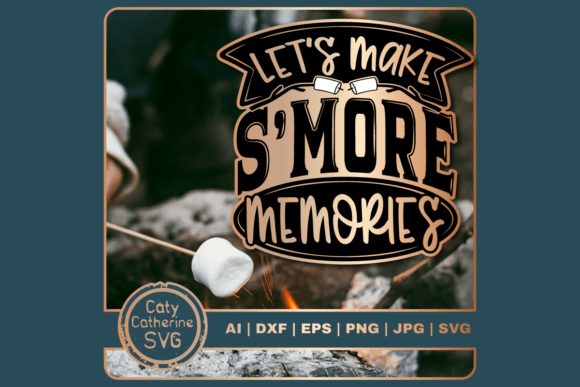
Reviewing Let’s Make More Memories Camping Design
As a designer who spends more time staring at stitch simulations than I do sleeping, I have learned that not every cute graphic translates well into thread. We see thousands of digital embroidery files cross our desks, but only a handful possess the structural integrity and aesthetic balance required for professional commercial embroidery. Recently, I pulled up the Let s Make S more Memories Camping Camp design by Caty Catherine to evaluate its potential for real-world application. This isn’t just about whether it looks good on a screen; it is about how it behaves under the needle, how it wears after washing, and whether it adds genuine value to a handmade product.
First Impressions: Mood and Visual Personality
The immediate appeal of this Graphics asset lies in its nostalgic warmth. The phrase "Let's Make More Memories" paired with camping imagery evokes a specific feeling of outdoor adventure and family bonding. For an embroidery designer, the layout is the first thing I scrutinize. Does the text flow naturally? Are the elements balanced? In this case, the design feels approachable and friendly, making it an ideal candidate for personalized gifts and boutique branding. It avoids the overly complex details that often plague amateur designs, which is a relief. Complex gradients and tiny shadows do not translate to thread, but this design appears to rely on clear shapes and legible typography, which is essential for clean stitching.
When I imagine this as a finished piece, I see it working beautifully on natural fibers. The rustic theme aligns perfectly with canvas, cotton, and linen. It does not scream for neon threads or high-gloss finishes. Instead, it calls for earthy tones—forest greens, burnt oranges, and warm browns. This inherent versatility makes it a strong contender for various craft business inventories, from summer camp merchandise to fall-themed home decor.
Real-World Application: From Screen to Stitch
To truly test a design, you must visualize it on actual substrates. I mentally placed this design on several common items to gauge its effectiveness. First, consider a heavy-weight canvas tote bag design. The bold nature of the quote would stand out clearly against the textured fabric. Here, the stitch density becomes critical. If the design is too dense, it will pucker the canvas; if it is too light, the fabric grain will show through. Assuming the file is optimized, this could be a bestseller for Etsy sellers targeting eco-conscious shoppers.
Next, I pictured it on a fleece sweatshirt embroidery project. This is where many designs fail. Fleece is thick and plush, requiring careful digitizing to prevent the stitches from sinking into the pile. If this design utilizes appropriate fill stitch techniques and perhaps a slight underlay, it could look cozy and professional. However, if the lettering is too thin, it might get lost in the fabric texture. For a personalized gift, such as a family reunion shirt or a scout troop jacket, the clarity of the message is paramount. The camping motif adds a playful element that appeals to both children and adults, broadening its market appeal.
I also considered its use on smaller items like embroidered patch creations or baby hats. For a patch, the design needs a clean border or a satin stitch edge to finish the look professionally. If the original file includes a border, it saves the digitizer hours of work. For baby embroidery, softness is key. A design with excessive satin stitch coverage can feel stiff against sensitive skin. Therefore, this design might be better suited for larger items like pillow covers or blankets rather than direct-to-skin baby clothes, unless the stitch count is relatively low.
Technical Considerations and Potential Pitfalls
While the aesthetic is strong, we must address the technical realities. The product description mentions formats like SVG, PNG, and EPS. It is crucial to note that these are primarily vector and image formats, not native machine embroidery files like PES or DST. As an experienced reviewer, I must advise that you will likely need to digitize this graphic yourself or hire a professional digitizer to convert it into a usable machine embroidery design. This step is vital. Auto-digitizing software often produces poor results, creating excessive jump stitches and uneven tension.
If you are converting this applique design or graphic yourself, pay close attention to the hoop size. The layout suggests a horizontal orientation, which fits well in standard 5x7 or 6x10 hoops. However, if you attempt to shrink it for a small 4x4 hoop, the text may become illegible. Tiny lettering is the enemy of embroidery. Always test the design on scrap fabric first. Check the thread colors against your intended fabric. A dark thread on a dark fabric will vanish, while a light thread on a white towel might lack contrast.
Another consideration is the fabric type. For stretchy materials like jersey knits, a proper stabilizer is non-negotiable. Without cut-away stabilizer, the design will distort after the first wash. For woven fabrics like tea towels or aprons, tear-away stabilizer might suffice, but testing is still recommended. The running stitch elements, if used for outlines or details, must be secure to prevent unraveling over time.
Enhancing Product Value and Brand Consistency
Why choose this specific design? In the crowded market of design assets, uniqueness and emotional connection drive sales. This camping-themed quote taps into the popular "van life" and outdoor recreation trends. Using it in your small shop product line can help establish a cohesive brand identity focused on adventure and memory-making. When customers see a well-executed finished product, they perceive higher value. Clean stitches, proper tension, and thoughtful color choices build trust.
For holiday embroidery projects, such as Father’s Day gifts or back-to-school gear, this design offers flexibility. It is not tied to a specific date, making it evergreen. You can create printable mockup images to showcase the design on various products before you even stitch a single thread. This allows you to gauge customer interest and refine your marketing strategy. Remember, the presentation of the custom apparel or accessory is just as important as the stitching itself.
Final Verdict for Crafters and Designers
The Let s Make S more Memories Camping Camp graphic holds significant promise for those willing to put in the digitizing work. It is not a plug-and-play solution for machine embroiderers unless you are purchasing a pre-digitized version from the designer. However, as a source material for Crafts and creative projects, it excels. Its strength lies in its emotional resonance and versatile layout.
Before committing to a large production run, I strongly recommend checking the licensing terms. Ensure that the license allows for commercial embroidery if you plan to sell finished items. Verify the resolution of the SVG and EPS files to ensure they scale without pixelation. Test the digitized version on multiple fabric types to determine the optimal stitch density and thread combination.
In conclusion, this design is a solid addition to your library if you appreciate rustic, memory-focused themes. It requires technical diligence to execute properly, but the result can be a high-quality, engaging product that resonates with customers. Whether you are an Etsy seller looking for your next hit or a hobbyist making gifts for friends, this design offers a charming narrative that translates well into thread, provided you respect the limitations and requirements of the embroidery process.